Revisiting The Unity Manifesto: Justice for the Foreign Workers of the CNMI
CNMI, Immigration Reform, Democracy, Unity Manifesto
Revisiting The Unity Manifesto: Why CNMI Must Do the Right Thing for Foreign Workers Now
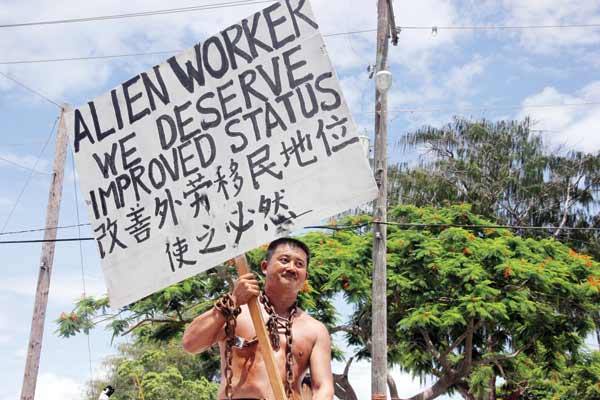
In 2014, a passage in The Unity Manifesto called on the people of the CNMI to imagine a future built on fairness, shared sacrifice, and genuine unity. Over a decade later, that passage reads less like a hopeful vision and more like an unfinished promise. Today, revisiting those words is not just an exercise in memory, it is a moral and democratic test for our islands. At the center of that test is a simple but transformative question: will we finally do the right thing by advocating for permanent residency and a pathway to U.S. citizenship for the foreign workers who have helped build the CNMI?
The Passage We Cannot Ignore: A Call from 2014
In The Unity Manifesto of 2014, one passage in particular stood out the most to those who were paying attention. Quoted in full, it declared:
“Let's dream of two Commonwealths, brothers and sisters. In the first one, we did not stand up for our brothers and sisters, and they ended up being repatriated en masse after over 35 years of dedication to our Commonwealth, leaving behind ghost towns in what used to be densely populated villages and commercial centers. The CNMI's development is not only halted, but also set back a few decades. Our Commonwealth is known around the world as the sweatshop labor exploitation country that collapsed on itself.
In the second one, we figured out their game in 2014 and woke up, much to their dismay. We embraced our brothers and sisters and joined them in support of their struggle for equal rights. The CNMI government took on an official stance of granting them what they deserve, and then the federal government capitulated and included a provision in its comprehensive immigration reform package that granted permanent residence with a fast track to U.S. citizenship to all foreign workers that had been living and working in the CNMI with proper documentation for 5 or more years. This was hailed around the world as a huge humanitarian victory, and the CNMI's old reputation as a sweatshop labor and exploitation haven was replaced by its new reputation as a brave nation that dared to do the morally right thing in a world where morals were giving way to strips of colored paper. And thus began what would be known as the Golden Age of the CNMI.
Which dream would you rather have come true? We are at a pivotal crossroads in our history, brothers and sisters.”
At the time, that passage did more than sound inspiring. It named, clearly and directly, the contradiction at the heart of our community. It refused the narrow idea that unity was only about reconciling political factions or healing family rivalries, and instead insisted that unity must also include the foreign workers who cleaned our hotel rooms, poured concrete for our roads, cared for our children, and staffed our restaurants and construction sites. In a single passage, it tied our economic survival to our democratic obligations, and reminded us that a society built on the labor of people without a voice cannot honestly call itself just.
Twelve years later, in 2026, that same passage has taken on a new and urgent relevance. As Congresswoman King-Hinds’ Northern Mariana Islands Labor Stabilization Act (another proposal to extend the CW program) moves through the federal process, we are once again being offered a familiar choice: accept another temporary fix that keeps foreign workers essential but insecure, or finally demand a permanent solution that honors their decades of contribution with real status and a pathway to U.S. citizenship. If we celebrate the bill's language reinforcing our dependence on foreign workers while settling for yet another extension without meaningful reform, we will repeat the very pattern that The Unity Manifesto warned us against: praising workers in speeches while denying them a true place in our democracy. This time, the people of the CNMI must insist that any labor stabilization effort be paired with genuine immigration justice, so that history does not repeat itself yet again, and so that our words about unity are finally matched by courageous action.
📌 Key Takeaway: The Unity Manifesto did not just call for harmony among locals; it called for justice for those who labor among us without a voice. Ignoring that call has consequences for our moral integrity and our democracy.
How Foreign Workers Helped Build the CNMI We Know Today
To understand why this moment is so crucial, we have to revisit the history of the CNMI’s development. From the rise of the garment industry in the 1980s and 1990s to the tourism booms and busts that followed, foreign workers have been the backbone of our economic story. They arrived from the Philippines, China, Bangladesh, Korea, and other parts of Asia and the Pacific, often leaving families behind in search of opportunity. They accepted long hours, modest wages, and uncertain futures because they believed that the sacrifices they made here would create better lives for their loved ones back home; and, eventually, perhaps for themselves in these islands they came to call home as well.
When hotels rose from the shoreline, foreign workers were there, mixing cement under the heat of the tropical sun. When tourists filled the rooms, foreign workers changed the linens, prepared the food, and greeted guests with practiced smiles. When the island’s children needed care, foreign nannies and caregivers stepped in. When typhoons struck, it was often foreign laborers who helped clear the debris, repair the roofs, and restore the power lines. In every chapter of the CNMI’s modern development, they appear, not as footnotes, but as central characters in the story of growth and survival.
Yet their legal status remained precarious. The transition from local immigration control to the U.S. federal system left many in limbo, renewing permits year after year, living with the constant fear that a change in law or policy could erase decades of life built here. Children grew up on these islands, speaking English and local languages, pledging allegiance to the U.S. flag in school, but discovering as teenagers that they had no clear future here. The CNMI prospered on their labor, but hesitated to acknowledge them as full members of the community. This gap between contribution and recognition is at the heart of why immigration reform is not just a policy issue: it is a moral one.

Shared spaces already reflect a shared future; policy must finally catch up.
The Heart of the Unity Manifesto: Inclusion, Justice, and Shared Destiny
The Unity Manifesto was more than a political document; it was a moral framework. Its key themes still resonate today: inclusion over exclusion, justice over convenience, and shared destiny over narrow self-interest. When it spoke of unity, it did not mean uniformity. It acknowledged the diversity of the CNMI: ethnic, cultural, economic, etc. and argued that unity comes from recognizing how deeply our lives are intertwined, not from pretending those differences do not exist.
One of its most powerful ideas was that unity must be tested in how we treat the most vulnerable among us. It is easy to speak of harmony when everyone at the table has the same last name, the same voting rights, and the same access to opportunity. It is much harder to speak of unity when we confront the reality that a large share of the people who clean our offices or care for our elders cannot vote, cannot own a home, and cannot plan for a secure future in the only home their children have ever known. The Manifesto insisted that unity without justice is only a slogan. That is why, even if it did not spell out every policy detail, its spirit pointed unmistakably toward a more inclusive approach to immigration and political participation.
💡Leaders: If your vision of unity does not extend to those who build, clean, and sustain our community, it is not unity. It is comfort dressed in noble language.
Why a Pathway to Permanent Residency and Citizenship Matters Now
Today, the CNMI faces a crossroads. Economic uncertainty, demographic change, and political fatigue have left many people feeling that the future is something happening to us, not something we are shaping together. Tens of thousands of people have been leaving the CNMI over the years in an ongoing brain drain. But there is a powerful, practical way to reclaim that sense of agency and reinvigorate our islands: create a clear, humane pathway to permanent residency and U.S. citizenship for the foreign workers who have already proven their commitment to these islands through years, often decades, of contribution and sacrifice. This is not about opening the floodgates to new arrivals; it is about honoring those who are already there, already rooted, already part of the fabric of our community.
Granting permanent residency and a path to citizenship would do more than stabilize families. It would create thousands of new voters, people who are not bound by the traditional family or respect-based voting systems that have long shaped CNMI politics and kept the wheels of the status quo continuously turning. These new citizens would not owe their political loyalty to a clan leader, a distant relative, or a patron who once helped them secure a job. They would owe their loyalty to the ideals of fairness, opportunity, and shared responsibility that drew them into the life of the community in the first place. Their votes would be grounded in lived experience: the experience of struggling to renew visas, of working through typhoons, of raising children in rented apartments, of navigating a system that benefited from their labor but hesitated to recognize their dignity.
New Voters, New Possibilities: Breaking Free from Old Political Patterns
For generations, CNMI elections have often been shaped by personal loyalty, family ties, and cultural norms of respect. These values, in themselves, are not bad. Respect for elders, loyalty to family, and honoring relationships are strengths of island culture. But when they become the primary currency of politics, they can limit accountability. Votes are cast not on the basis of policies or long-term vision, but on who attended a rosary, who helped with a funeral, who is related to whom, or who once offered a job or a favor. The result is a system in which incumbents are hard to challenge, new ideas struggle to gain traction, and difficult but necessary reforms, like immigration changes, are postponed again and again because they might upset existing power structures.
Bringing thousands of new voters into this system, voters who are not woven into the same family networks and who do not share the same expectations of reciprocal favors, would change the dynamics in profound ways. These new citizens would be more likely to ask: Which candidate supports fair labor laws?Who has a plan for affordable housing?Who will invest in schools where our children learn?Who talks honestly about climate resilience, healthcare, and long-term economic diversification? Their votes would be grounded less in who they owe and more in what kind of future they believe in. That shift could be the spark that moves CNMI politics from personality-driven contests to issue-driven debates.
📌 Key Takeaway: A new electorate of former foreign workers is not a threat to local culture; it is an antidote to political stagnation, opening space for ideas, accountability, and genuine public service.
The Impact on Community Life: From “Us and Them” to “All of Us”
The impact of such reform would not be limited to the ballot box. When people know they belong, they invest differently in the community. Imagine what it would mean for thousands of long-time foreign workers to finally feel secure enough to start businesses and make long-term plans. Children who once worried about their parents’ status could think instead about college, careers, and how they might serve their island community. Churches, civic groups, and neighborhood associations would gain new leaders: people who bring fresh perspectives, new energy, and a deep sense of gratitude for the chance to participate fully in the life of the CNMI.
The social divide between “locals” and “non-locals” would begin to soften, not because differences disappear, but because shared responsibilities grow. When a former foreign worker becomes a citizen and votes in their first election, they are not just choosing a candidate; they are publicly declaring, “This is my home, and I am accountable for what happens here.” That sense of shared ownership is the foundation of any healthy democracy. It transforms complaints into participation, frustration into organizing, and isolation into solidarity. Over time, the narrative of the CNMI would shift from a place that relies on outsiders to do manual labor and service work to a place that welcomes neighbors to share in its future.
Democracy at Stake: Why Representation Matters for Stability and Growth
Democracies are judged not only by how they treat their majority, but by how they treat those who have the least formal power. In the CNMI, foreign workers have lived for decades as essential but voiceless participants in our economy. This imbalance is not sustainable. It creates a quiet tension: people who work long hours, pay taxes, and obey laws, but who cannot influence the decisions that shape their lives. Over time, that kind of tension erodes trust, not only among foreign workers, but among citizens who see the contradiction and wonder what other injustices are being tolerated in the name of convenience or tradition.
By creating a pathway to permanent residency and citizenship, the CNMI can strengthen its democratic foundations. A more inclusive electorate is a more stable electorate. When people feel they have a stake in the system, they are more likely to support its institutions, respect its laws, and work to improve it from within. This is especially important in a small community like the CNMI, where political shocks (economic downturns, federal interventions, natural disasters) can be felt intensely. A broader base of engaged citizens makes it easier to build consensus, adapt to change, and hold leaders accountable when they fall short of their promises.
💡 Voters: Expanding the electorate does not dilute your voice; it amplifies the collective demand for honest leadership and long-term planning.
The Moral Imperative: Doing the Right Thing, Not the Easy Thing
At its core, the question of immigration reform for CNMI foreign workers is not just about economics or politics; it is about morality. For decades, the islands have benefited from a system in which a large segment of the workforce lived in a state of legal uncertainty. Their labor was welcomed, but their aspirations were not. Their sweat was essential, but their voices were optional. The Unity Manifesto asked us to examine this contradiction and to recognize that a community that claims to value respect, hospitality, and faith cannot indefinitely treat its long-term neighbors as temporary tools.
Doing the right thing now means acknowledging that we waited too long. It means admitting that fear of change, of losing control, of upsetting traditional voting blocs, has kept us from embracing a more just and inclusive future. It means understanding that every year we delay, children continue to grow up in uncertainty, families remain divided, and opportunities for deeper unity are lost. Moral courage is not abstract; it shows up in specific choices. In this case, it looks like standing up in public forums, writing to lawmakers, organizing community discussions, and insisting that any conversation about the CNMI’s future include a clear, generous pathway for foreign workers to become permanent residents and, eventually, citizens.
Learning from 2014: Why This Time Must Be Different
When we revisit that passage from The Unity Manifesto today, we do so with the knowledge of what happened after 2014. We saw promises made and deferred. We watched as policy debates moved slowly, while the lives of foreign workers moved forward without the security they deserved. We witnessed natural disasters and economic shocks that exposed just how dependent the CNMI is on the very people whose status remains uncertain. We also saw younger generations, both local and foreign-born, begin to question why a community that speaks so often of respect and family allows such an obvious injustice to continue.
This time must be different because the cost of inaction is clearer than ever. Without reform, the CNMI risks losing experienced workers who have decades of local knowledge. It risks raising another generation of children who feel unwanted in the only home they know. It risks deepening the divide between what we say we stand for and how we actually behave. And perhaps most dangerously, it risks allowing our democracy to stagnate under the weight of old habits and narrow interests. The Unity Manifesto was a warning as much as a vision: if unity does not grow, division will. If justice is postponed, resentment will fill the space it leaves.
This is one of the reasons why I wrote Shadows in Paradise: The Dark History of the CNMI Guest Worker Program, hoping to bring the human aspect of the conversation to the forefront again, since we're starting to discuss extending yet again our long-term "guest" workers for another decade...because "the CNMI simply is not prepared to lose all CW workers" in 2029. How long have we been "not prepared" for a fully local workforce? How long have we been relying on "guest" workers as an endless supply of cheap imported foreign labor? How many years does one have to spend living and working legally in a place to finally be considered a full member of the community? Will the foreign workers of the CNMI ever be accepted as people of the CNMI, or will our people forever only see them as numbers on a screen, as bodies to fill a quota?
📌 Key Takeaway: We cannot rewrite 2014, but we can decide that the next decade will not be another chapter of delay and half-measures. The choice is ours.
A Vision of Tomorrow: What a Reformed CNMI Could Look Like
Imagine a CNMI ten years from now where the vision of The Unity Manifesto has finally become reality. In this future, thousands of former foreign workers are now citizens. Some serve on school boards, others run small businesses, and a few have even stepped into elected office, bringing with them a deep understanding of labor, family migration, and the day-to-day realities of life on the islands. Elections are more competitive, not because people are more divided, but because more voices and ideas are on the table. Debates focus on how to improve education, diversify the economy, protect the environment, and strengthen healthcare, rather than on who belongs to which family or which candidate attended which event.
In this imagined future, children of former foreign workers and long-time local families learn side by side, not as guests and hosts, but as classmates who share a common civic identity. They grow up hearing stories of how their parents and grandparents worked together to push for reform, how they turned a moment of moral hesitation into a turning point of courage. The phrase “unity” no longer feels like a campaign slogan; it feels like a lived reality in neighborhoods, workplaces, and places of worship. The CNMI becomes known, not just for its beaches and hospitality, but for its willingness to confront hard truths and choose fairness over fear.
The Role of Ordinary People: Advocacy as a Civic Duty
None of this will happen on its own. Immigration reform in the CNMI will not arrive as a gift from distant decision-makers; it will be the result of sustained, courageous advocacy from ordinary people. Local citizens need to speak up, not only out of compassion for foreign workers, but out of a clear understanding that their own democracy will be stronger, more accountable, and more forward-looking when those workers finally become fellow citizens. Foreign workers, too, have a role to play: by sharing their stories, participating in community life, and making visible the contributions they have long made in silence.
Advocacy can take many forms: organizing forums where foreign workers and citizens discuss the future of the CNMI together; writing op-eds and letters that remind leaders of the need to do the right thing; supporting candidates who openly champion a pathway to permanent residency and citizenship; and building coalitions across ethnic, religious, and social lines. Each of these actions sends a clear message: the people of the CNMI are ready to move from words to deeds, from symbolic unity to substantive inclusion.
Conclusion: Answering the Manifesto’s Question
When we revisit that passage from The Unity Manifesto today, we are not simply remembering a document from 2014. We are confronting a question that still hangs in the air above the CNMI: Will we build a future that includes everyone who has built these islands with us? The answer will be measured not in speeches, but in laws. Not in slogans, but in status changes. Not in promises, but in the faces of thousands of new citizens standing in line to vote, free from the old constraints of family-based and respect-based voting systems, ready to choose leaders based on vision, courage, and integrity.
The path forward is clear: advocate for permanent residency and a pathway to U.S. citizenship for the foreign workers of the CNMI. Do it because they have earned it. Do it because your democracy needs it. Do it because unity, without justice, is an empty word. The Unity Manifesto offered us a glimpse of who we could become. The question now is whether we will finally become that community, one that chooses courage over comfort, fairness over fear, and a truly shared future over a fragile and unequal present. The time to answer that question is now, before H.R. 9787 passes into law and the CW program gets extended for another decade (or two) of more corruption and more business as usual in the CNMI.