
Voiceless Americans: Immigrants, Legal Status, Political Representation, and Identity (May 2014)
Immigration, U.S. History, Political Identity
Voiceless Americans: Immigrants, Legal Status, Political Representation, and Identity
Originally submitted as a college research paper on May 6, 2014.
A historical academic essay by Kelvin Rodeo examining how legal status and political representation have shaped the identities of Chinese and Asian immigrants in the continental United States and long-term nonresident workers in the CNMI.

Introduction: A Nation of Immigrants and Unequal Belonging
The United States of America is a nation of immigrants, and most of us, regardless of how long our families have been in this country, can trace our origins back to immigrants. Most of us today have had the privilege of being born into this country and growing up with an American identity, enjoying all the benefits of an American citizenship, without even giving any of it a second thought. When new people from other countries come here, many people tend to look down on them for no reason other than the fact that they weren't born Americans, forgetting that somewhere down the line, their ancestors were also not technically born "Americans." This social attitude toward immigrants has shaped public policy over our history, and those two factors play a huge role in the development of identity for immigrants. The Chinese immigrants in the 1800s and the other Asian immigrants in the early 1900s faced many obstacles with their legal status and political representation, which were a hindrance to the development of their identity as Americans, or Asian Americans. Similarly, Asian immigrant workers to the United States Commonwealth of the Northern Mariana Islands (CNMI) currently face many obstacles with their legal status and political representation, which is causing a crisis of identity among the majority of them as they struggle to be accepted by the residents of the Commonwealth. Immigrants' legal status and their political representation play an important role in their sense of identity, and unfavorable political conditions in turn hinders the process of acculturation and how these immigrants live their daily lives.
📌 Key Takeaway: From the outset, the essay argues that law and social attitudes toward immigrants directly shape how, and whether, immigrants can develop a secure American identity.
Chinese Immigrant Labor and Legal Barriers in the 19th Century
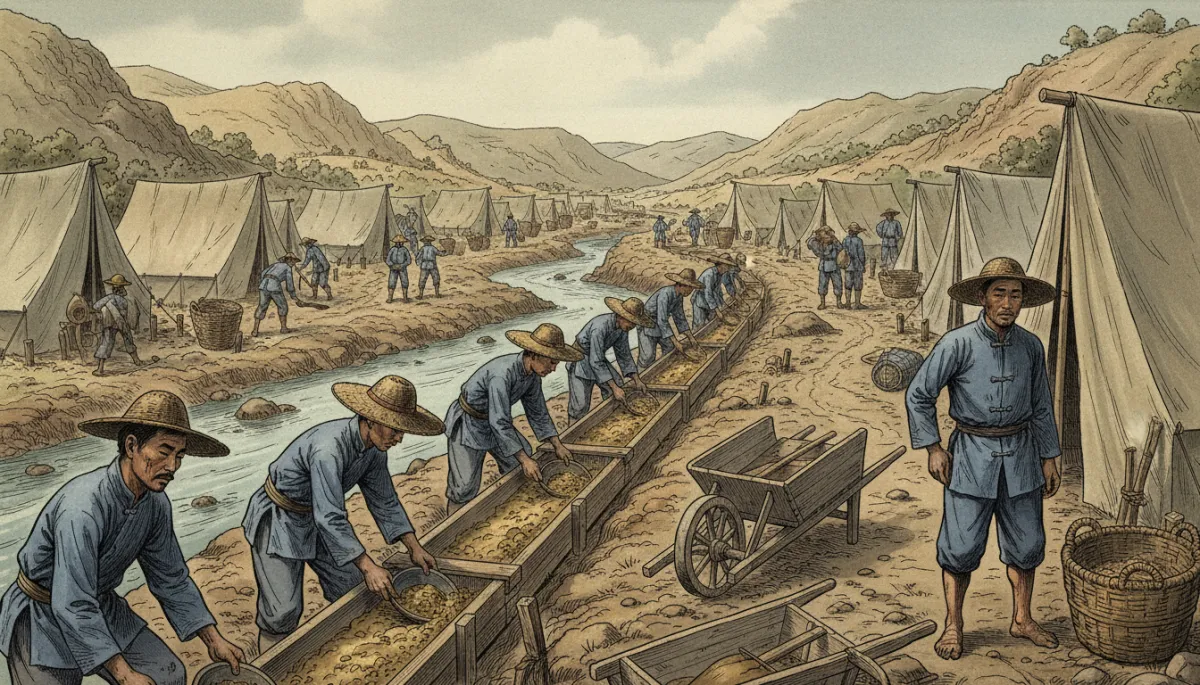
Most of the economic success of the 19th Century in this country was due, in large part, to the countless Chinese immigrants who came to California and worked in the gold mines and on the railroads. In the book Asian Americans: Opposing Viewpoints, William Dudley reports that "many employers at railroads, mining operations, and farms found Chinese laborers to be relatively cheap, dependable, and less likely than whites to strike for higher wages" (Dudley 17). They were less likely than whites to strike for higher wages because at that time, their legal status in this country was not the same legal status as a U.S. citizen, which came with a whole slew of rights and privileges that the Chinese laborers' legal status did not afford them.
Because the identity of parents tends to get passed down to children, the children of immigrants also end up struggling with their sense of self and development of identity. Teresa Casey and Christian Dustmann, from the Centre for Research and Analysis of Migration, stated in their article published in The Economic Journal, "Immigrants' Identity, Economic Outcomes and the Transmission of Identity Across Generations": "A main result of our analysis is that the identities of the mother and father are a very important factor in identity formation" (F48). This means that if the parents don't feel a very strong connection to the place they immigrated to, their children, despite assimilating into the local culture, will still share, with their parents, some of the same uncertainty about their identity.
"A main result of our analysis is that the identities of the mother and father are a very important factor in identity formation" (F48).
— Teresa Casey and Christian Dustmann
William Dudley also states, "Chinese immigrants faced several difficulties as a result of their ethnicity. Because they, with very few exceptions, were not eligible for U.S. citizenship (and the voting rights and other powers that came with it), full inclusion in U.S. society was denied to them" (17). Because of this, the Chinese could not establish a Chinese-American identity, and it affected their acculturation process, which could have been the basis for the cultural argument against the Chinese, as reported by Dudley: "The Chinese, it was argued, could never assimilate within American society or comprehend American democracy" (17). The Chinese laborers who came to our country and whose work greatly benefitted the economy could not call this place home because they were challenged on every level and considered as outsiders regardless of how long they had been living and working in the United States.
💡 Pro Tip: Note how the essay links citizenship barriers directly to the impossibility of forming a stable hyphenated identity such as "Chinese-American."
The Chinese Exclusion Act and Falsified Papers
In 1882, Congress passed the Chinese Exclusion Act, which further complicated matters of identity for the Chinese immigrants at the time, as it prevented any more Chinese workers from coming into the country, and it also provided that the Chinese people already in the United States were not eligible for naturalization as Americans. During this time, many Chinese people were being sent back to China, but because many of them had already begun to consider the U.S. their home, they were desperate enough to seek out more unconventional means of remaining in the country. According to "Behind the Numbers: Talking Politics with Foreign-born Chinese Americans," an article by Pe-te Lien of the Political Science Department and Ethnic Studies Program at the University of Utah, in International Migration, "the assimilation of Chinese Americans was hindered by the controversy over the falsification of immigration papers during the era of exclusion." These people wanted to remain in this country as Americans to the point that they were willing to risk getting caught for immigration fraud.
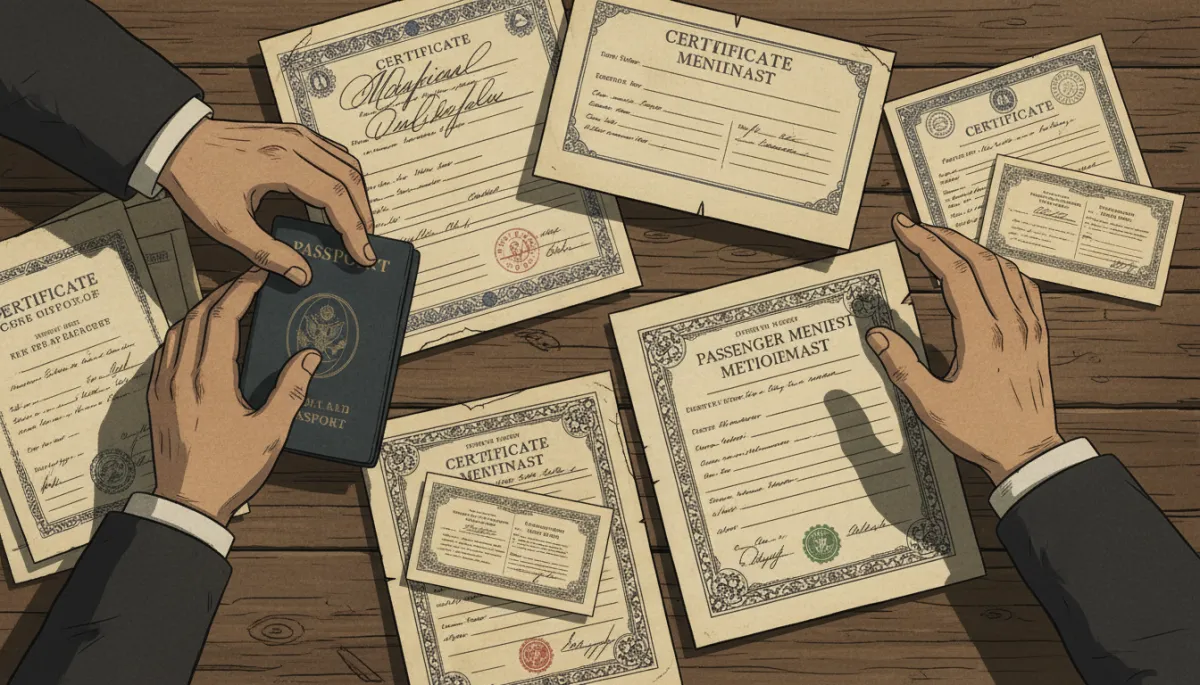
Such is the same type of resolve that one can find among some of the immigrant workers in the CNMI today. The Saipan Tribune, reporting on a case of immigration fraud, stated that a woman had "allegedly conspired with a job-placement agency owner and another person to file petitions for CNMI-only Transitional Workers permits for some alien workers that falsely and fraudulently named the company as the workers' employer" (De La Torre). If immigrants are so desperate to continue living in this country and retain their American identity that they would subvert the law, why haven't they achieved a true American identity? The answer, of course, is that it's because of legislation like the Chinese Exclusion Act, and the general societal response to such things.
New Asian Immigrants and the 1924 Immigration Law
However, because the act only targeted Chinese, other immigrants from Asia started to pour into the country over the next few decades following its enactment. This new influx of Asian immigrants faced many of the same situations their Chinese predecessors had faced. Despite the need for their labor, many people were opposed to them and the same old arguments were brought back to life. Dudley states that the complaints against the new Asian immigrants were that "the new immigrants were unassimilable; their low wages undermined the living standards of American workers; they did not understand American democracy" (19). The backlash against the Asian immigrants was so strong that another immigration law was passed in 1924, which made it so that essentially, all Asians, not just the Chinese, were not allowed to immigrate to the U.S. This happened despite the general consensus that these people were needed in the country to work certain jobs. According to Dudley, the agriculture magnate John Spreckels told Congress in 1907, "If we do not have the Japs to do the field labor, we would be in a bad fix, because you know American labor will not go into the fields" (19).
This has become a typical assessment of immigrant labor throughout the history of this country. As these Asian immigrant populations grew over the decades, however, they gained more of an influence, and, according to Dudley, have become accepted by society at large for their many successes in business, education, and revitalizing communities in the U.S. (22). Despite this, a typical argument against granting immigrants full representation is that they are not truly attached to this country and just send all their money back to where they came from instead of keeping it flowing within this country. Contrary to popular belief, however, immigrants contribute much of their income into the economic flow of this nation. The article "Immigration Nation" by Tamar Jacoby from Foreign Affairs states that all immigrants' contributions are estimated to amount to $700 billion, which makes up about 5.4% of the country's Gross Domestic Product (Jacoby 57).
📌 Key Takeaway: Economic dependence on immigrant labor has repeatedly coexisted with legal exclusion and social suspicion, a tension the essay traces across time.
From the Continental U.S. to the CNMI: Recycled Rhetoric, New Context
These same talking points against Asian immigrants in the history of the U.S. are still being used today in a piece of America that most people are unaware of, where a new set of Asian Americans are struggling to be recognized as rightful members of this nation and are having to deal with the complications that arise in developing their sense of identity in the face of adversity and opposition on the governmental and societal level.
The CNMI Nonresident Workers Act and an Engineered Underclass
About 6,000 miles across the Pacific Ocean, in the United States Commonwealth of the Northern Mariana Islands, another immigrant struggle over legal status, political representation, and identity has been brewing over the past three decades and is coming to a head this year. In 1983, the Nonresident Workers Act was passed in the CNMI, which allowed the hiring of "nonresident" Asian immigrant workers to help establish the economy of the relatively new Commonwealth. This was due to the lack of qualified, skilled labor in the islands at that time. This law provided for a system in which immigrants could come in from Asia and work under contracts, which generally lasted a year. It also provided that these immigrants could renew their contracts and find new employers. However, it also included a clause that prevented them from obtaining permanent residency and a pathway to citizenship, regardless of the duration of their stay in the Commonwealth. The Nonresident Workers Act of 1983 states, "No employment contract, or nonresident employment agreement, registration, certification or permit, or the presence of an alien within the Commonwealth pursuant thereto shall be grounds for naturalization or citizenship, or permanent residency except as may be otherwise provided by law." It was this law, and this clause, specifically, that gave birth to the immigrant identity crisis in the Commonwealth.
It created a working class for the private sector (mostly in the garment factories and the tourism industry) that consisted mainly of Asian immigrants who lived and worked there for many years without being able to vote for the people who were writing the laws that they had to obey. With no permanent legal status and nonexistent political representation, many of these immigrants were subjected to exploitation and abuse by their employers, and there was nothing the victims could do to really see justice. These Asian immigrants were the backbone of the Commonwealth's garment and tourism industries, and they brought a lot of revenue into those industries. According to "After 9/11: Militarized Borders and Social Movements in the Mariana Islands," an article written by Keith L. Camacho in the American Quarterly journal, the Commonwealth's garment industry, which operated from 1983 to 2009, "annually contributed up to $140 Million to the commonwealth's tax base. Coupled with tourism, the other major industry, the CNMI once boasted up to $2.6 billion in total business gross revenues in 1997" (Camacho 691).
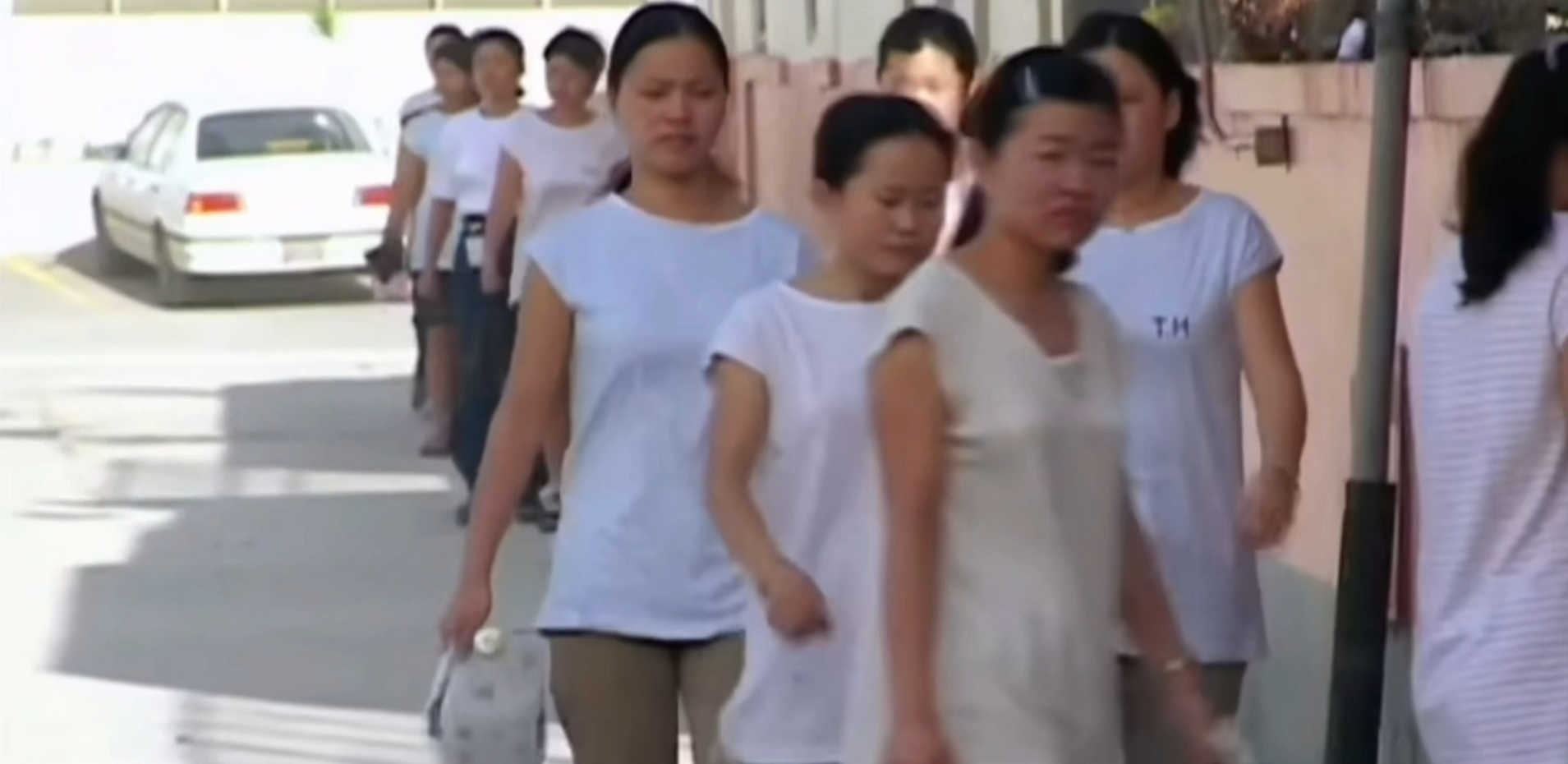
Despite being such an integral part of the Commonwealth's economy, much of the anti-immigration rhetoric of the 1800s and 1900s United States has once again been resurrected and has now found its way into the minds of many locals, which further confuses the identity of the Asian immigrants to the islands, because they feel that despite all of their contributions to the community, despite all of the time they have spent there, the residents still don't see them as fellow Americans. Many of these immigrants have gotten married and had children during their time in the Commonwealth and are well rooted into the communities they live in.
Dekada, Worker Activism, and the Struggle for Recognition
In 2004, amid talks on the federal level to do something about the deplorable immigration and labor system of the Commonwealth, which had allowed so many abuses to take place, the group Dekada was formed. The group's goals, according to Camacho, were to get rid of the legal/political structure that allowed employers to abuse their employees, to investigate past unsettled worker abuse cases, and to provide residency for immigrant workers who had been living in the Commonwealth for more than five years (692). In his testimony during a hearing of the Committee on House of Natural Resources, Subcommittee on Insular Affairs on August 15, 2007, Bonifacio Sagana, the president and founder of the Dekada movement group, testified that "Dekada was born of the frustration of long-term alien contract workers with a CNMI labor and immigration system that failed to recognize their years of economic productivity, ties to the Commonwealth, and contributions to the community . . . effectively indenturing them to their employers" (Sagana 83).
"Dekada was born of the frustration of long-term alien contract workers with a CNMI labor and immigration system that failed to recognize their years of economic productivity, ties to the Commonwealth, and contributions to the community . . . effectively indenturing them to their employers" (Sagana 83).
— Bonifacio Sagana
Most of the Asian immigrant workers to the Commonwealth feel that they are true residents of the islands and true citizens of the U.S., but the one thing that matters the most, their legal status, does not reflect what they feel in their hearts and what they identify as. Despite not being accepted by others in the community and being blamed for low wages or a lack of employment opportunities, the Asian immigrants to the Northern Mariana Islands still consider the CNMI their home and they still consider themselves to be Americans, even if it's only de facto.
💡 Pro Tip: The essay uses Dekada to illustrate how organized activism emerges when long-term residents are structurally denied political representation.
Identity, Legal Uncertainty, and the 2014 Policy Shift
While most of them still hold out hope that their status will change, and that the U.S. Congress will enact an immigration reform policy that will remedy their situation and grant them the permanent residency and pathway to citizenship that they deserve, many have allowed their circumstances and the local backlash against them to break their spirits. For these people, they have begun to question their identity as de facto Americans and are even considering the possibility that they will soon no longer be able to call the Commonwealth their home, because of the new immigration policy that fully takes effect on December 31st of this year, which will no longer allow them to live and work in the islands unless they have new permits. Most cannot afford these new permits, so they are thrust once more into the ocean of uncertainty as they struggle to come to grips with their unique identity as Asian-Americans in the Pacific and the thought of having to let that identity go to return to an old identity from a time long gone in a land far away.
Conclusion: Law, Representation, and the Possibility of Belonging
The legal status and political representation of immigrants play important roles in the formation of their identity in a new country, and these factors can greatly influence the acculturation process, hindering it if unfavorable policies are in place that prevent the immigrants from fully benefitting from their position in the new land. U.S. history is replete with examples of how the political and social attitude towards immigrants negatively affects their acculturation process and the development of their identity as Americans. As a nation that was built by immigrants, we must take into consideration the identity crisis that many immigrants of today face due to restrictive or unaccommodating statutes and policies which prevent them from obtaining an adequate legal status and political representation. If we can adjust our policies and shift towards a more immigrant-friendly political dialogue, countless immigrants can then shift from having an identity crisis that keeps them tied between two worlds and always uncertain of the future, to being able to cement their identity and solidify their place among their fellow Americans.
📌 Key Takeaway: The essay closes by arguing that policy reform is essential if immigrants are to move from a state of identity crisis to a secure sense of belonging as Americans.