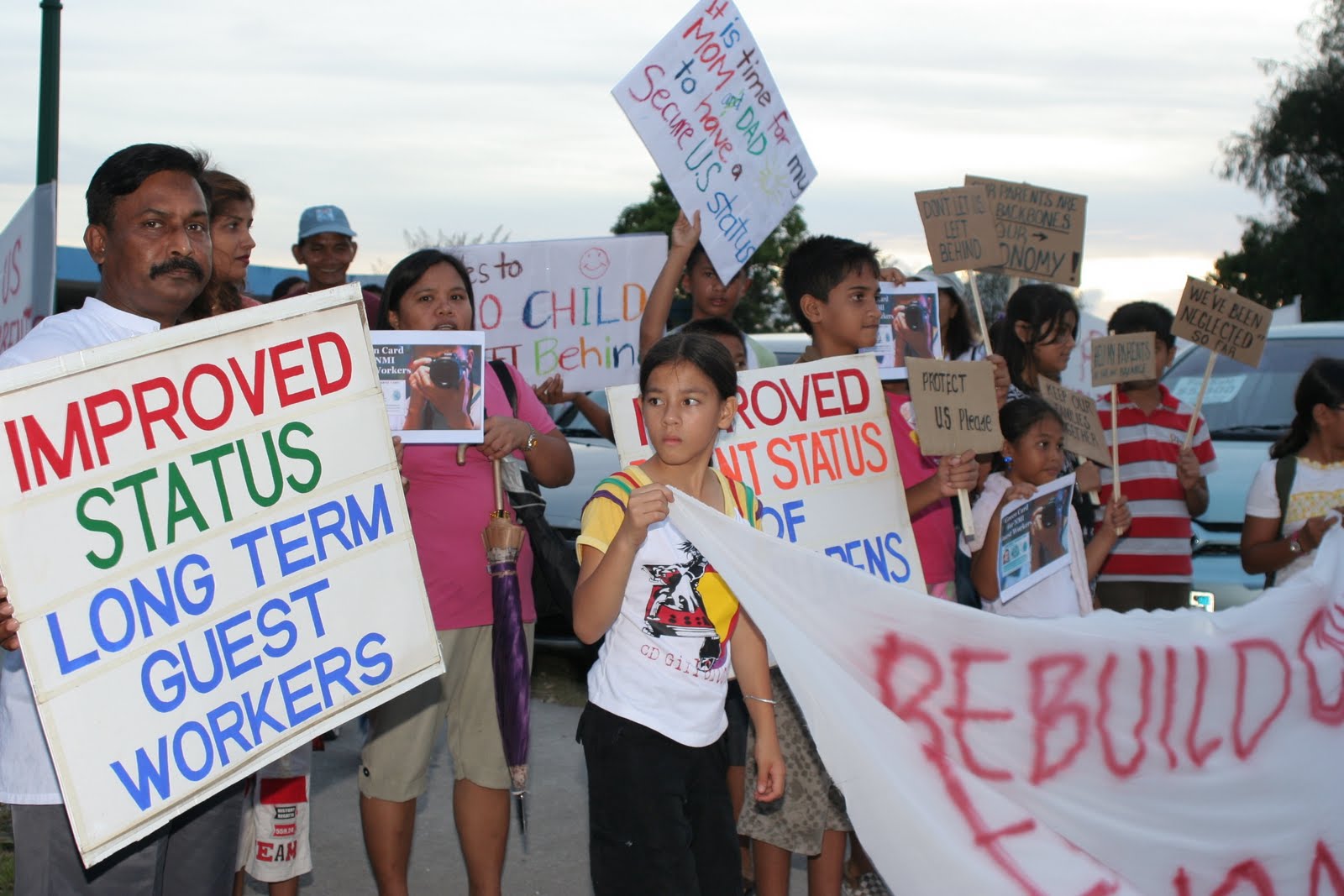
Speech on the Plight of the Foreign Workers of the CNMI
CNMI, Immigration, Human Rights, Historical Speech
Speech on the Plight of the Foreign Workers of the CNMI
By Kelvin Rodeo — Originally delivered Tuesday, January 28, 2014
This historical speech documents the exploitation, legal limbo, and human rights crisis facing thousands of long-term nonresident workers in the U.S. Commonwealth of the Northern Mariana Islands (CNMI), and calls for urgent political and moral action.
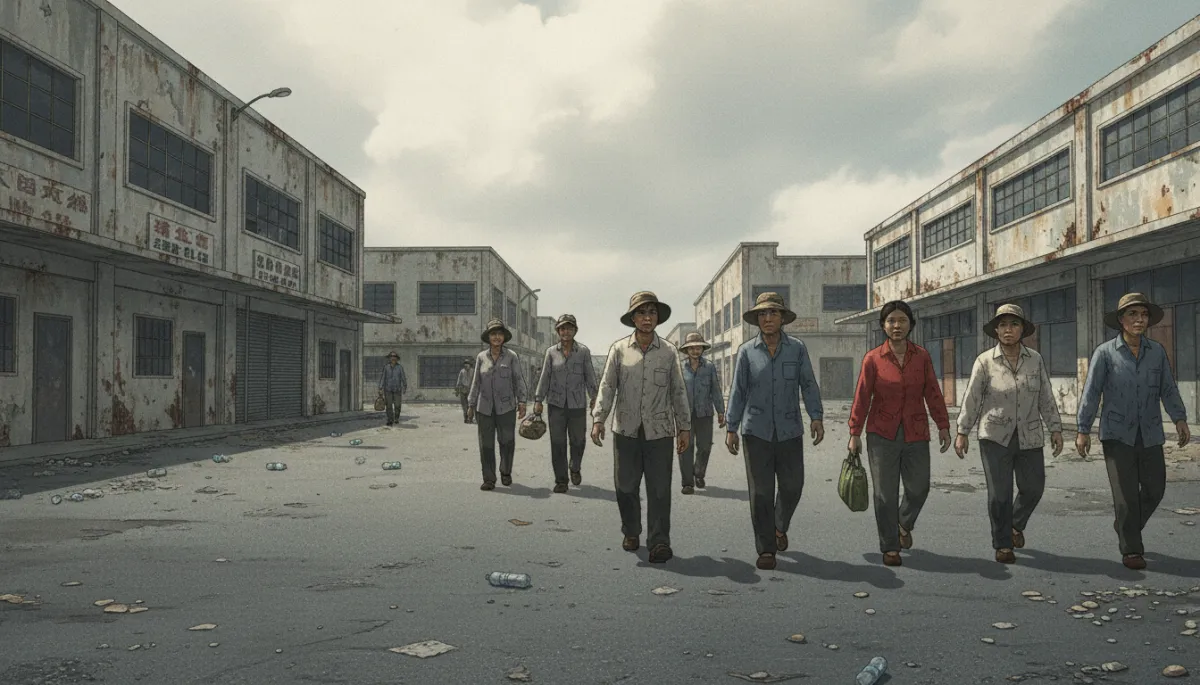
"Clearly, you have a situation where business and government have come together and really promoted the exploitation of foreign workers, workers who are brought to Saipan." These were the words of Congressman George Miller of California during an interview with ABC's 20/20 program which aired on May 24, 1999. This episode shed light on grave violations of human rights being carried out on the tiny piece of U.S. soil known as the island of Saipan in the U.S. Commonwealth of the Northern Mariana Islands (CNMI). These abuses were being carried out against Asian nonresident workers who had been moving to the CNMI since 1983 to live and work, a group which amounted to around 57% of the CNMI population at the time, according to Census 2000 data.
According to the 2010 Census data as reported by the Pacific Islands News Association website on May 15, 2012, these Asian nonresident workers are still a significant portion of the population, amounting to 49% of the total population of the CNMI at that time. Despite making up such a large portion of the population and workforce in the CNMI, these people are now at risk of deportation. So today, I will discuss this issue of the foreign workers in the CNMI. In order to gain a clear understanding of this issue, I will explain the problem, go over a few of its causes, and discuss a few potential solutions which could help change the lives of thousands of people and their families.
The Problem: Exploitation of Foreign Workers in the CNMI
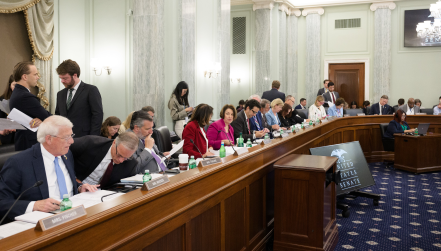
Let's talk about the problem first. In the CNMI, businesses and the government have come together to build and sustain a system which thrives off of exploiting foreign workers. A prime example of such exploits is the story of Kayleen Entena, who was 23 at the time that she testified in a Hearing Before the Senate Committee on Energy and Natural Resources, 110th Congress, on February 8, 2007. Entena testified that as recently as September 2005, she was recruited to work in Saipan and was promised a job as a waitress at a local restaurant. However, upon her arrival, instead of working as a waitress, her supervisor ordered her to perform sexual favors for customers and told her that waitressing would not pay for her plane tickets and passport. She then explains that she was raped 5 times on her first day on Saipan. This type of story is much more common than we would like to believe, and the CNMI government seems to be doing nothing about it.
Another blatant example of the collusion between businesses and the government to exploit foreign workers is the case of Melanie Lleno Gonzales, who, according to the Saipan Tribune on November 5, 2010, sued her former employer for allegedly refusing to pay her $19,246.08 that the Department of Labor (DOL) had ordered her former employer to pay her in unpaid overtime wages and liquidated damages in 2007. Wendy Doromal, a human rights activist and blogger who has paid close attention to the situation in the CNMI, said on her blog Unheard No More! on February 22, 2011: "Because the DOL and the Office of the Attorney General do not enforce the DOL-issued Administrative Orders, these new cheating employers, like the hundreds that preceded them, will be allowed to steal from these foreign workers with no fines, no jail time and no consequences of any kind. The robbed employee will be left without money or justice. That has been the pattern in the CNMI for decades, and it is escalating to a dangerous level."
These are just a couple of the many incidents of injustice and abuse that foreign workers have had to suffer during all their time in the CNMI. These people are the lifeblood of the CNMI, the very backbone of the economy; according to the 2011 CNMI Prevailing Wage and Workforce Assessment Study published on August 31, 2012, non-U.S. citizens take up the vast majority of jobs in private sector areas such as, but not limited to: food preparation and service, construction and extraction, sales, and installation, maintenance, and repair. Despite all of the work that these people have put into building the infrastructure and economy of the CNMI for all these years, the CNMI government and the U.S. government seem to just be fine with just kicking out a significant portion of the CNMI population.
Causes: Laws, Policies, and Legal Limbo
Next, let's go over what allowed this problem to occur. Starting in the early 1980s, the government of the CNMI invited thousands of foreign workers to work under contracts and viewed them strictly as labor units, and not as potential future citizens. This was done through CNMI Public Law 03-66, the Nonresident Workers Act, passed in 1983, which allowed the hiring of nonresidents from all over Asia to grow the CNMI economy, but also included a provision which stated that none of the time these people spend in the CNMI counts toward any form of permanent residency. This led to there being thousands of disenfranchised de facto permanent residents who have been living in the CNMI for 5-20 years or more.
According to the U.S. Citizenship and Immigration Services website last updated April 14, 2013, the Consolidated Natural Resources Act (CNRA) was signed into law on May 8, 2008. This law extends most provisions of U.S. immigration law to the CNMI, with a period of transition from the CNMI system to the federal system. The transition period for implementation of U.S. immigration law in the CNMI began on November 28, 2009, and is scheduled to end on December 31, 2014. The Pacific Rim Law & Policy Journal in 2011 states that a failure of adequate rulemaking and the lack of a long-term status provision places nearly half of the CNMI population in an extremely precarious situation. This population it refers to is the large population of long-term nonresident foreign workers in the CNMI.
This failure of adequate rulemaking is the CNRA. This law gives no real consideration to the fact that most of these nonresident workers have spent the majority of their adult lives living and working on U.S. soil. It gives no real consideration to the fact that these people consider the CNMI their home now and a lot of them do not have a home to return to in their country of origin. It gives no real consideration to the fact that many of these people have, in keeping with the normal processes of adult life, fallen in love, gotten married, and had children who, by virtue of being born on U.S. soil, are U.S. citizens. It gives no consideration to the very real possibility that its implementation as it currently is will break up families, separating parents from their U.S. citizen children.
Solutions: Governmental, Societal, and Individual Action
Now that we understand the problem and have discussed its causes, let's talk about some possible solutions to this grave situation. On the governmental level, a new bill should be introduced on the federal level which grants permanent residency to the thousands of de facto permanent resident foreign workers who have been living in the CNMI for 5 or more years. Additionally, the new bill should aim to keep families together and not deprive anyone of rights that they should have gotten had the CNMI been under the US Labor and Immigration laws from the start. Also, on the local level, the CNMI government should take an official position advocating for the granting of U.S. Permanent Residency and a pathway to U.S. citizenship to these many de facto permanent residents.
On the societal level, people must stop looking at immigrants primarily as expendable temporary labor units and start seeing them for what they really are: future fellow citizens of our nation who share in our aspirations for a better life. We must remember that our nation was built by immigrants, so we should not be opposed to helping these immigrants get the rights that they deserve for all of the hard work that they do for our nation and its development.
Finally, on an individual level, we can each contact our state Senators and Representatives and demand that they address the situation of the thousands of legal, long-term nonresident foreign workers in the US Commonwealth of the Northern Mariana Islands who are facing deportation by the end of this year if the provisions in the Consolidated Natural Resources Act of 2008 are not amended to take into consideration the amount of time that each legal, long-term nonresident foreign worker has already spent living in the CNMI as a de facto permanent resident.
Conclusion: A Call to Conscience and Action
Today, I've told you about the problem facing the thousands of nonresident workers living and working in the US Commonwealth of the Northern Mariana Islands, I've explained its causes, and I have offered solutions on the governmental, societal, and individual levels. Immigration is a touchy subject in this country, and the tendency of people is to assume that an immigrant is here illegally. However, the thousands of immigrant workers in the CNMI are legal and have been legal from the moment they stepped onto that tiny piece of U.S. soil in the Pacific. According to Islands Business Magazine in February 2013, there are still more than 12,000 skilled and professional foreign workers that help run virtually all aspects and levels of the local economy. These people consider the CNMI their home now, and want to have their de facto permanent residence made official along with a pathway to U.S. citizenship so that they can finally join the rest of the CNMI residents as full members of society with full voting rights. Don't let families get broken up this year. Keep one of the most horrible injustices of our time from happening. Contact your elected representatives and fight for what is right, help the foreign workers of the CNMI get the rights that they deserve!